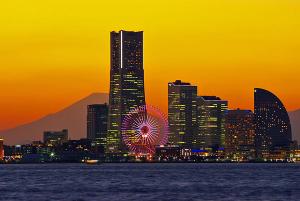
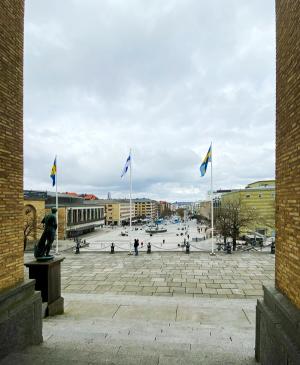
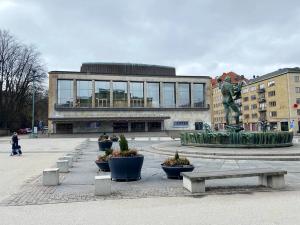
An image of Yokohama: like the City, Yokohama is the country’s second-largest city.
A Second city.
In a text by historians Lars Nyström and Erik Hallberg about the City, I find a list of shared characteristics for Second Cities: they have globally active companies. They nurture a tradition of innovation in politics and ideology. They cultivate an 'expert culture' within certain professional sectors. They prioritize large infrastructure projects that can integrate the urban area into the global economy.
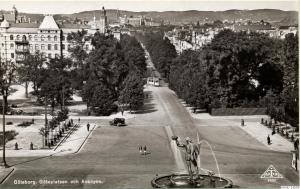
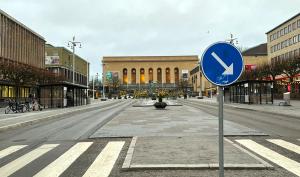
I recognize the City I walk through.
In addition, according to the researchers, Second Cities do not turn inward toward the nation or the capital. Instead, they turn outward toward global economic flows. Thus they also actively seek the role of hosts of international events, while simultaneously asserting themselves as “places with a distinct culture and unique identity."
The researchers refer to this as a form of "municipal foreign policy".
Again, this confirms my image of the City.
I ask myself whether Second Cities collaborate with one another? Is there a direct point of contact between Yokohama and Gothenburg? Or between Second Cities in general? If so, what kind of relationship emerges from that? Shared codes—like this type of skyline, perhaps?
Lars Nyström and Erik Hallberg, Göteborg som andra stad. Porten mot väster i myt och verklighet, in Göteborg genom Tiderna Nedslag i stadens sociala och politiska historia, eds. Christensen, J., Cornell, P., Daun, J., Lunde, M., Daidalos, 2021.